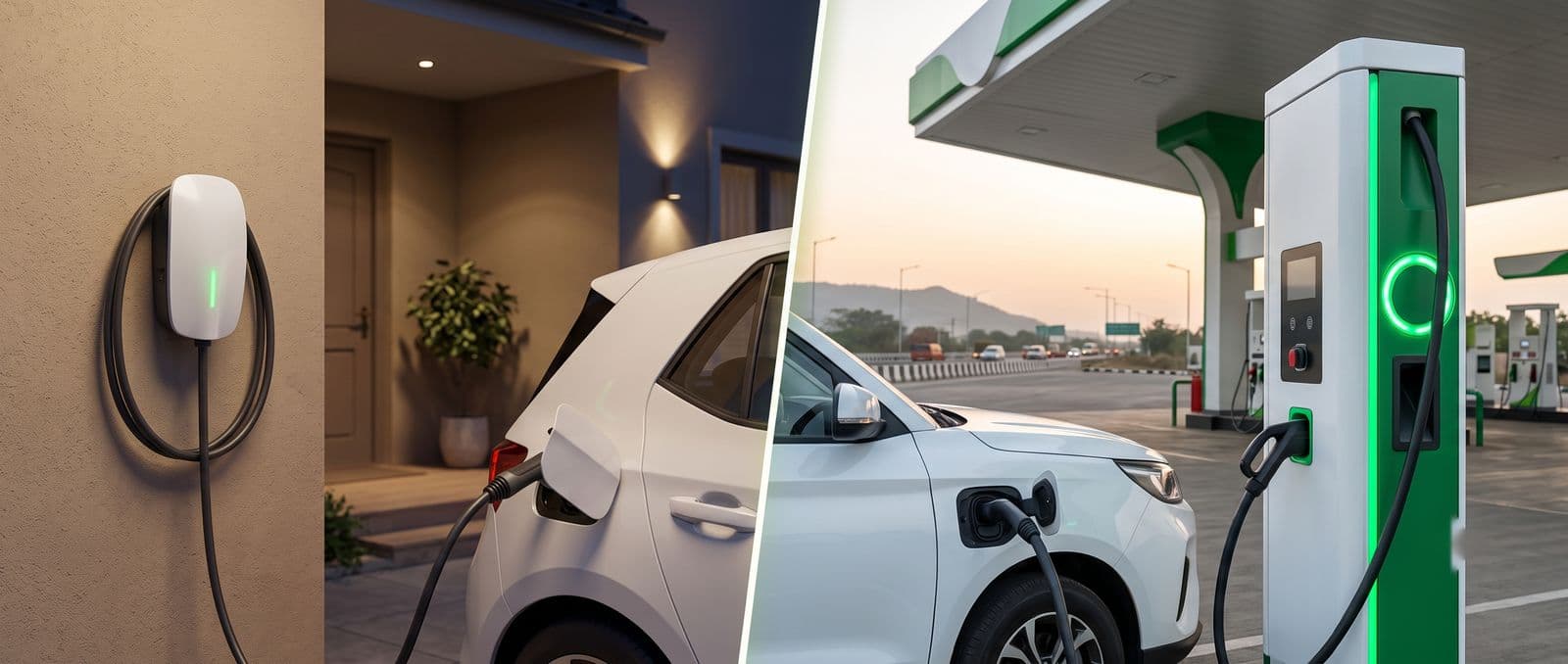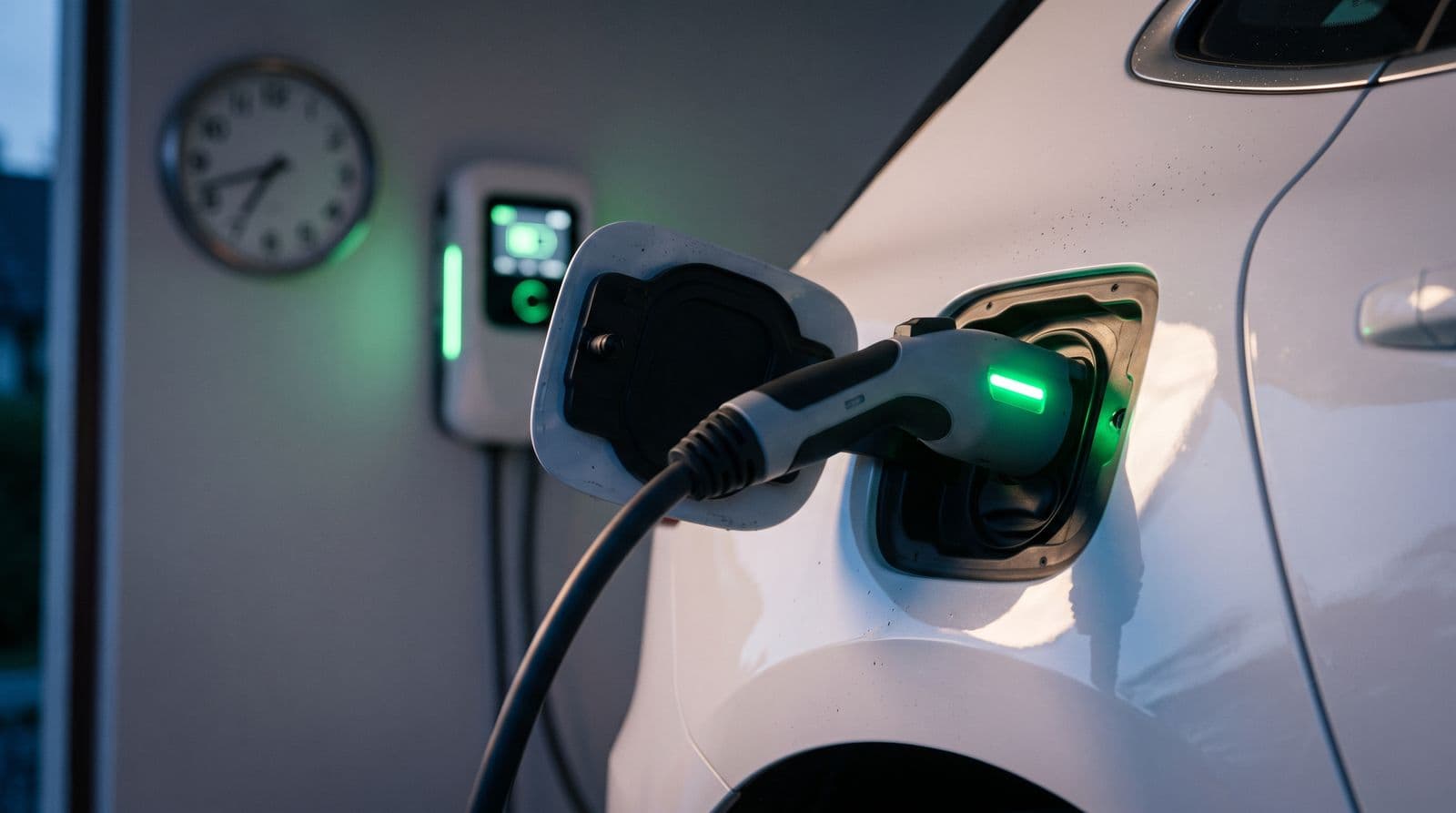
For most EV owners, the home charger is the most important piece of charging infrastructure they will ever use. It is where the car is parked longest, where electricity is usually cheapest and where charging fits around your life instead of the other way round. Getting the installation right matters for both safety and convenience.
Step 1: Pick the right charger for your car
Match the charger to your car's onboard charger. If your car accepts 7.2 kW on AC, a 7.2-7.4 kW single-phase wallbox is the natural fit. Buying an 11 kW unit for a car that accepts only 7.2 kW will not make it charge faster, and 11 kW also needs a three-phase supply. Many cars ship with a portable charger for 15 A sockets; it is a useful backup but slower than a wallbox.
Step 2: Check your sanctioned load
Your electricity bill shows your sanctioned or contracted load in kW. A 7.2 kW charger running alongside air conditioners, a geyser and kitchen appliances can push a typical home past its sanctioned load, which can lead to tripping, penalties on your bill or both. If needed, apply to your DISCOM for a load enhancement before installation. In Tamil Nadu this is TNPDCL; in Mumbai it is BEST, Tata Power, Adani Electricity or MSEDCL, depending on your area. Many distribution companies accept such applications online.
Step 3: Decide between your existing meter and a separate EV connection
The Ministry of Power's 2024 guidelines for EV charging infrastructure allow residence owners, housing societies and RWAs to apply for a separate metered connection for EV charging, billed at the applicable EV tariff. Whether that is cheaper than charging on your domestic meter depends on your state's tariff structure. Some regulators set a concessional tariff for EV charging connections, but domestic slab rates can also be low for modest usage. Compare both options using your DISCOM's current tariff schedule.
Tip: If you live in a society, a separate EV connection or a sub-meter makes billing transparent and avoids disputes about common-area electricity.
Step 4: Get the wiring right
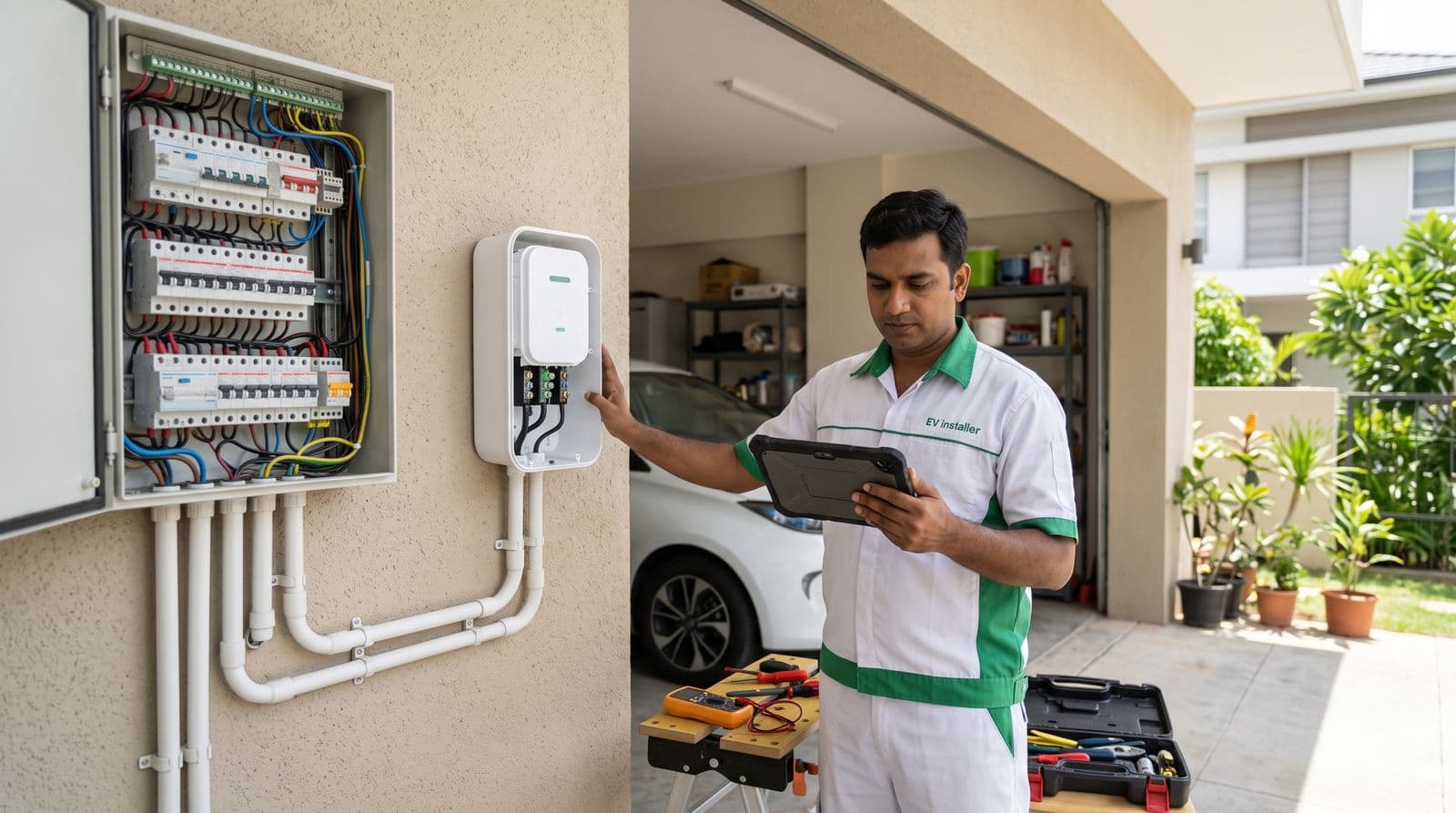
An EV charger draws high current continuously for hours, which is very different from most household appliances. A licensed electrician should handle the installation. Key elements typically include:
- A dedicated circuit from the distribution board, with cable sized for continuous current and the cable run length.
- An appropriately rated MCB for overcurrent protection.
- An RCCB or RCD for earth-leakage protection. Many wallboxes include DC leakage detection; check whether the manufacturer specifies a Type A or Type B RCD.
- Proper earthing with a low-resistance earth pit; poor earthing is one of the most common causes of charger faults in Indian homes.
- Surge protection, especially in areas prone to voltage fluctuations or lightning.
- Weatherproof mounting (look for an IP54 or better rating for outdoor or semi-covered parking).
The Central Electricity Authority's safety regulations include specific provisions for EV charging installations, including earth protection and residual current protection. A reputable installer will follow these and the relevant BIS standards.
Step 5: Permissions
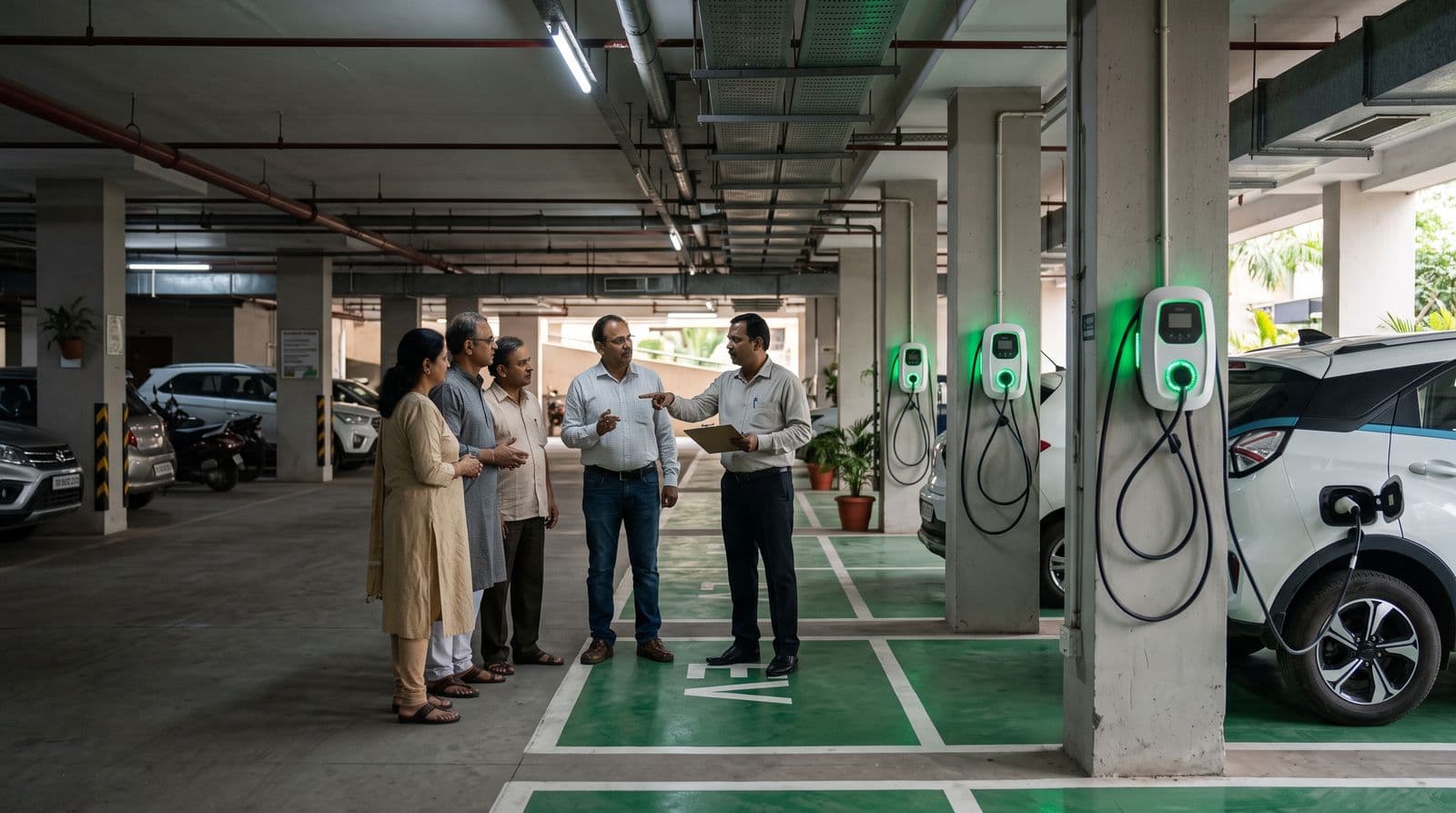
In an independent house, you mainly need DISCOM approvals for any load change or new connection. In an apartment, you will also need permission from the society or RWA to mount the charger and route cables through common areas. See our separate guide on EV charging in housing societies for how to approach that conversation.
Step 6: Commissioning and first charge
- The installer tests insulation, earth resistance and RCD trip function.
- The charger is configured: current limit, any scheduling and app connection.
- A test session confirms the car draws the expected power without nuisance tripping.
- You receive documentation, warranty details and safety instructions.
Smart features worth having
Scheduled charging lets you take advantage of any time-of-day tariff your DISCOM offers. Load management can automatically reduce charging current when other appliances are running, so you avoid exceeding your sanctioned load. Some chargers also support RFID cards or app-based access control, which is useful in shared parking.
Amphive provides home EV charger installation in South India and Mumbai, starting with a site inspection and an electrical-readiness assessment before any work begins.
A good installation is invisible. You plug in at night, the car is ready in the morning, and nothing trips.
Spend a little time on load checks, earthing and protection devices at the start, and your home charger should deliver years of trouble-free charging.
Frequently asked questions
You need DISCOM approval if your sanctioned load must be increased or if you want a separate EV connection. Charging within your existing sanctioned load on a properly wired circuit generally does not need a new connection, but check your DISCOM's rules.
Yes. EV chargers and cars monitor earth continuity, and poor earthing is a leading cause of faults and failed sessions. It is also essential for protecting people from electric shock.
Yes, if the charger has a suitable ingress protection rating, the cabling is protected and the installation follows safety rules. A canopy or wall-mount under cover adds protection during monsoon.
Sources
- Ministry of Power EV charging guidelines 2024 (Mercom India summary)
- CEA (Measures relating to Safety and Electric Supply) Regulations, 2023 (Powerline)
- DERC EV charging tariff (Mercom India)
Policies and tariffs change. Information is accurate to the best of our knowledge as of the publication date.