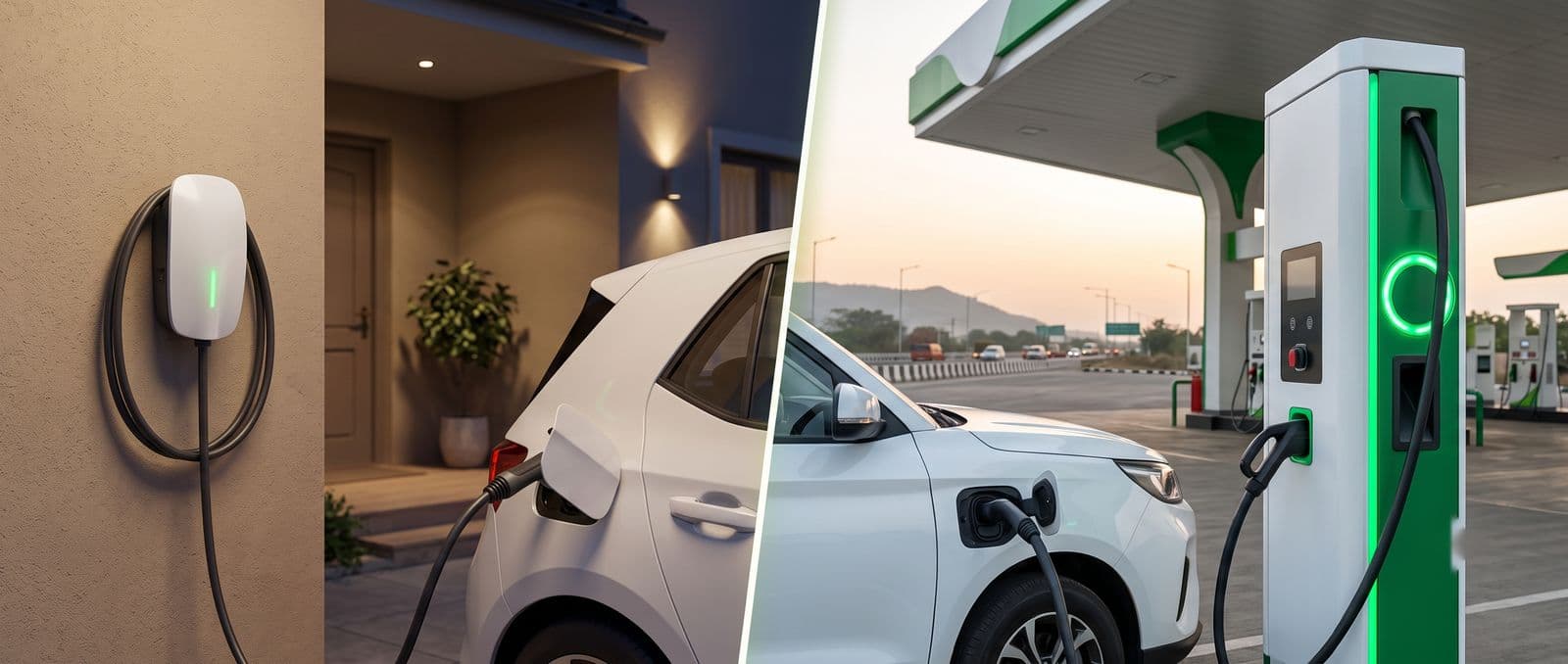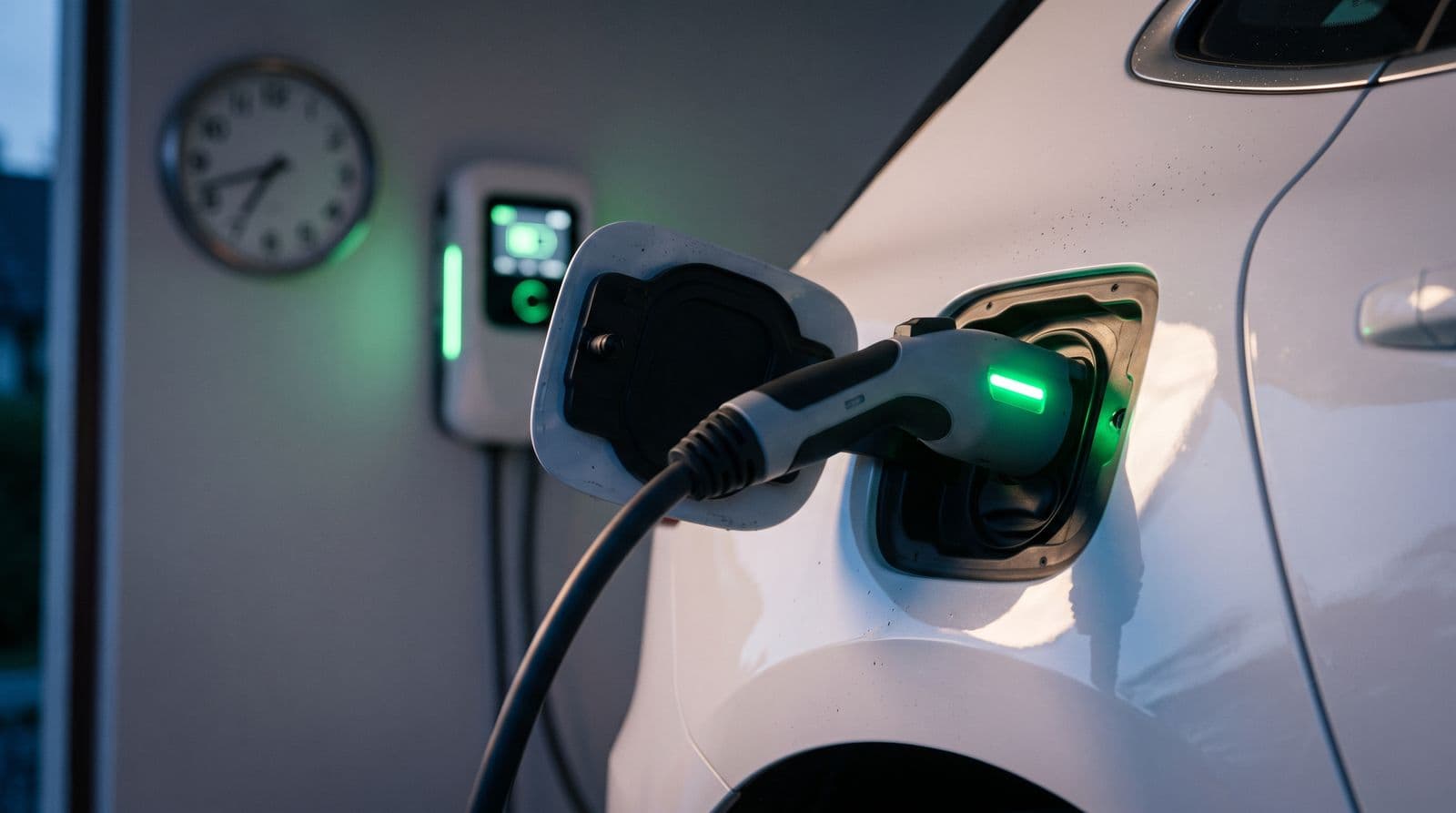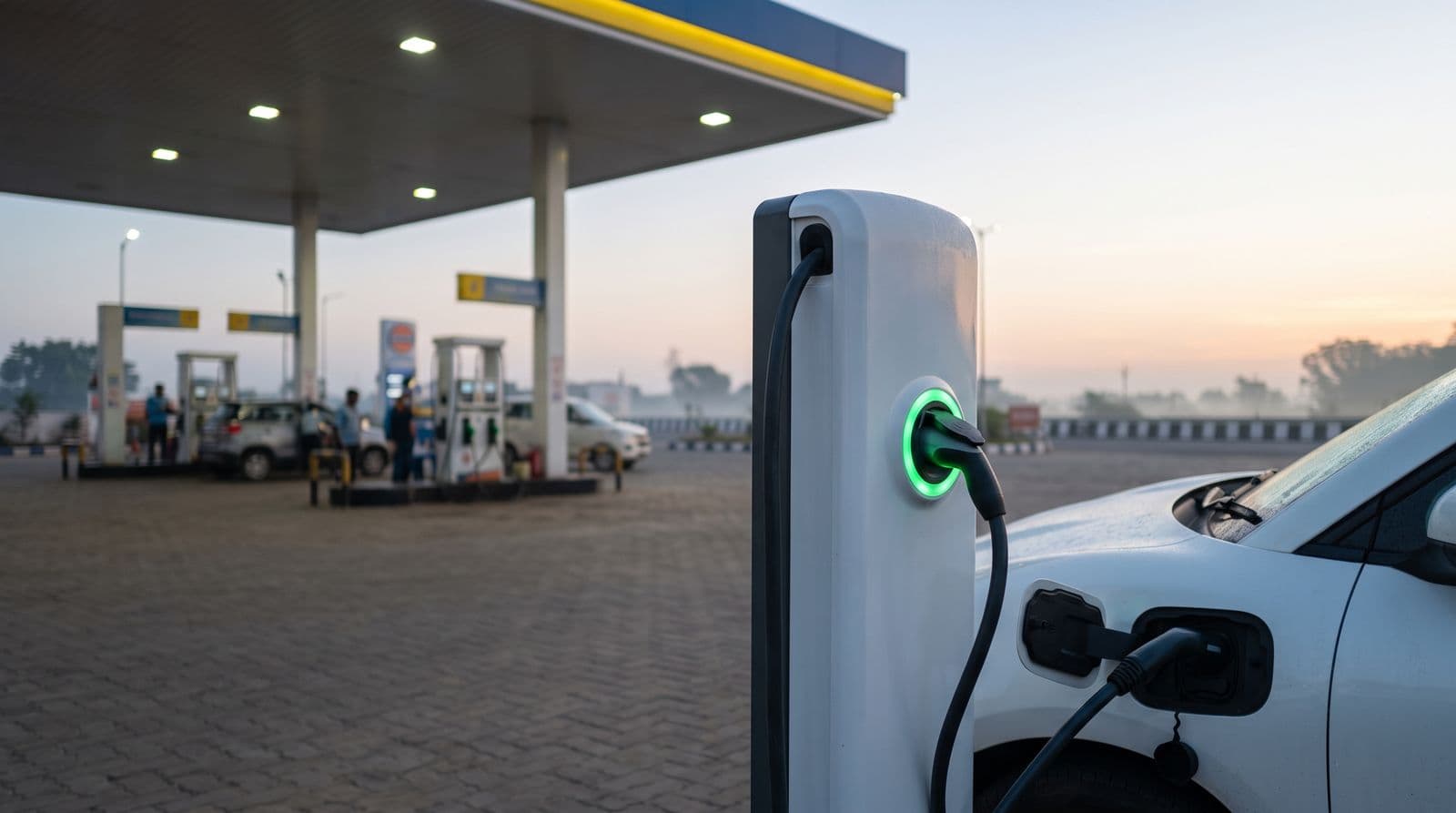
Pull into an Indian charging station and you may see several different plugs hanging from the chargers. India's charging landscape has evolved quickly, moving from early low-voltage standards to the global CCS2 system that most electric cars now use. Knowing which connector your vehicle needs saves time and frustration.
Type 2: the standard AC plug for cars
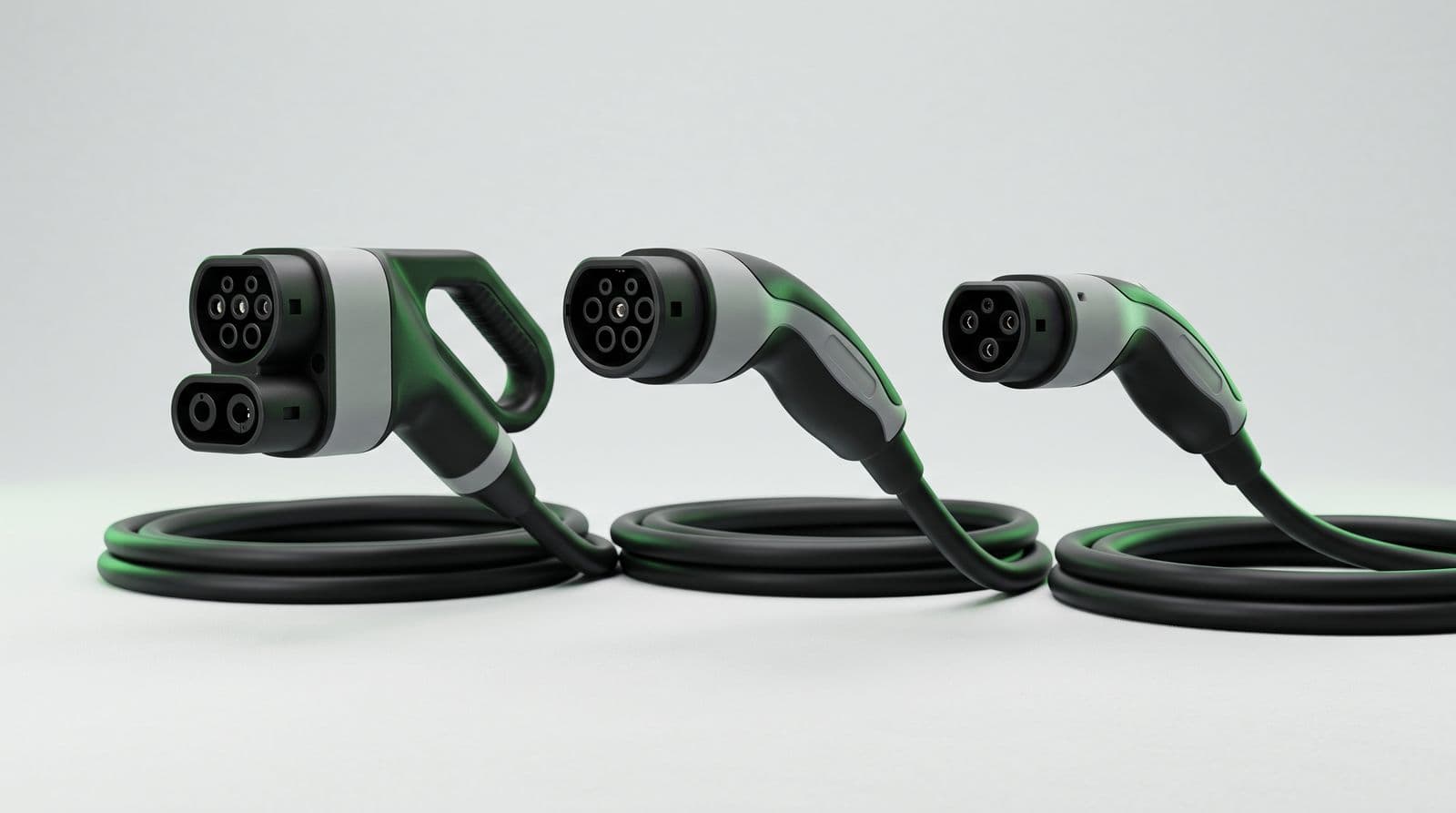
The Type 2 connector (IEC 62196-2), sometimes called the Mennekes plug, is the standard AC charging inlet on most electric cars sold in India. It supports single-phase and three-phase charging, so the same plug handles a 7.2 kW home wallbox and an 11 kW or 22 kW three-phase charger. Your car's onboard charger determines how much of that power it can actually use.
CCS2: the dominant DC fast-charging standard
CCS2 (Combined Charging System, Combo 2) adds two large DC pins below the Type 2 layout. The car has a single inlet that accepts either a Type 2 AC plug or a CCS2 DC plug. Almost all current electric cars in India - including models from Tata, MG, Mahindra, Hyundai, Kia, BYD and others - use CCS2 for fast charging, and it is the connector you will find on most highway and city DC chargers.
Tip: If you drive a modern electric car in India, CCS2 for DC and Type 2 for AC is almost certainly what you need. Filter for CCS2 in your charging app.
Bharat AC-001 and DC-001: India's early standards
When India's first wave of public charging was planned around 2017, the government specified two low-cost standards. Bharat AC-001 provides three 230 V outputs of about 3.3 kW each (around 10 kW total) using industrial-style sockets, intended mainly for two-wheelers, three-wheelers and early small cars. Bharat DC-001 is a low-voltage DC standard of up to about 15 kW, aimed at early vehicles with low-voltage battery packs such as some first-generation fleet cars.
As electric cars moved to higher-voltage battery packs and global standards, Bharat chargers became less relevant for private cars. You may still see them at older installations and government sites, and Bharat AC-001 sockets remain useful for some two- and three-wheelers.
GB/T: the Chinese standard
GB/T is China's national charging standard, with separate AC and DC connectors. In India, a GB/T-style DC connector is used in the Bharat DC-001 specification, and some electric buses, commercial vehicles and imported equipment use GB/T. It is not used for DC charging by mainstream private cars sold in India today.
CHAdeMO: a fading presence
CHAdeMO is a Japanese DC fast-charging standard. Some of India's early fast chargers included a CHAdeMO gun, but very few cars on Indian roads use it today, and new chargers increasingly omit it.
LECCS: India's own connector for light EVs
Two- and three-wheelers are the majority of India's EVs, but historically almost every brand used its own plug. To fix that, the Bureau of Indian Standards approved the Light Electric Combined Charging System (LECCS) in 2023 as IS 17017 (Part 2/Section 7). It is a combined AC and DC connector designed for light electric vehicles, developed with input from NITI Aayog, the Department of Science and Technology, ARAI and industry. Several leading two-wheeler makers have adopted it, and an industry consortium is working to build an interoperable charging network around it.
Quick reference
- Type 2: AC charging for cars, single or three-phase, common at homes and workplaces.
- CCS2: DC fast charging for nearly all current electric cars in India.
- Bharat AC-001: low-power AC, three outputs of about 3.3 kW, mainly two- and three-wheelers.
- Bharat DC-001: low-voltage DC up to about 15 kW, early fleet vehicles; uses a GB/T-style connector.
- GB/T: Chinese standard, seen on some buses and commercial vehicles.
- CHAdeMO: Japanese standard, now rare in India.
- LECCS (IS 17017 Part 2/Sec 7): combined AC/DC connector for light EVs.
Why interoperability matters
Common connectors mean any car can use any compatible charger, which makes charging networks more useful and reduces range anxiety. Communication standards like OCPP help in a similar way behind the scenes, letting chargers from different manufacturers work with the same software platform.
The right plug is the first step to a stress-free charge.
If you are unsure what your vehicle needs, check the charging flap and your owner's manual, or ask your dealer. Once you know, filtering chargers by connector type takes the guesswork out of every trip.
Frequently asked questions
Most electric cars sold in India use Type 2 for AC charging and CCS2 for DC fast charging. Check your car's charging inlet or owner's manual to confirm.
Generally no. Bharat DC-001 is a low-voltage standard designed for early vehicles, and most modern cars use high-voltage packs with CCS2.
LECCS is India's combined AC/DC charging connector standard for light electric vehicles, published by BIS as IS 17017 (Part 2/Section 7) in 2023.
Sources
- BIS LECCS standard for two- and three-wheelers (MarkLines)
- India's combined charging connector standard for LEVs (EMobility+)
- BIS standards for EVs (NITI Aayog e-AMRIT)
- Type 7 connector / LECCS (Wikipedia)
Policies and tariffs change. Information is accurate to the best of our knowledge as of the publication date.