Is an electric car really cheaper to run than a petrol car in India? The short answer is yes, often by a wide margin, but the size of the saving depends heavily on where you charge. Here is a transparent way to work it out for yourself, using simple assumptions you can replace with your own numbers.
Step 1: Know your efficiency
Petrol cars are measured in km per litre. EVs are measured in km per kWh (or Wh per km). A typical compact electric SUV in mixed Indian driving might manage around 6-7 km per kWh; smaller cars do better, and large, powerful SUVs do worse. A comparable petrol compact SUV might achieve 12-15 km per litre in real-world city and highway driving.
Step 2: Know your energy price
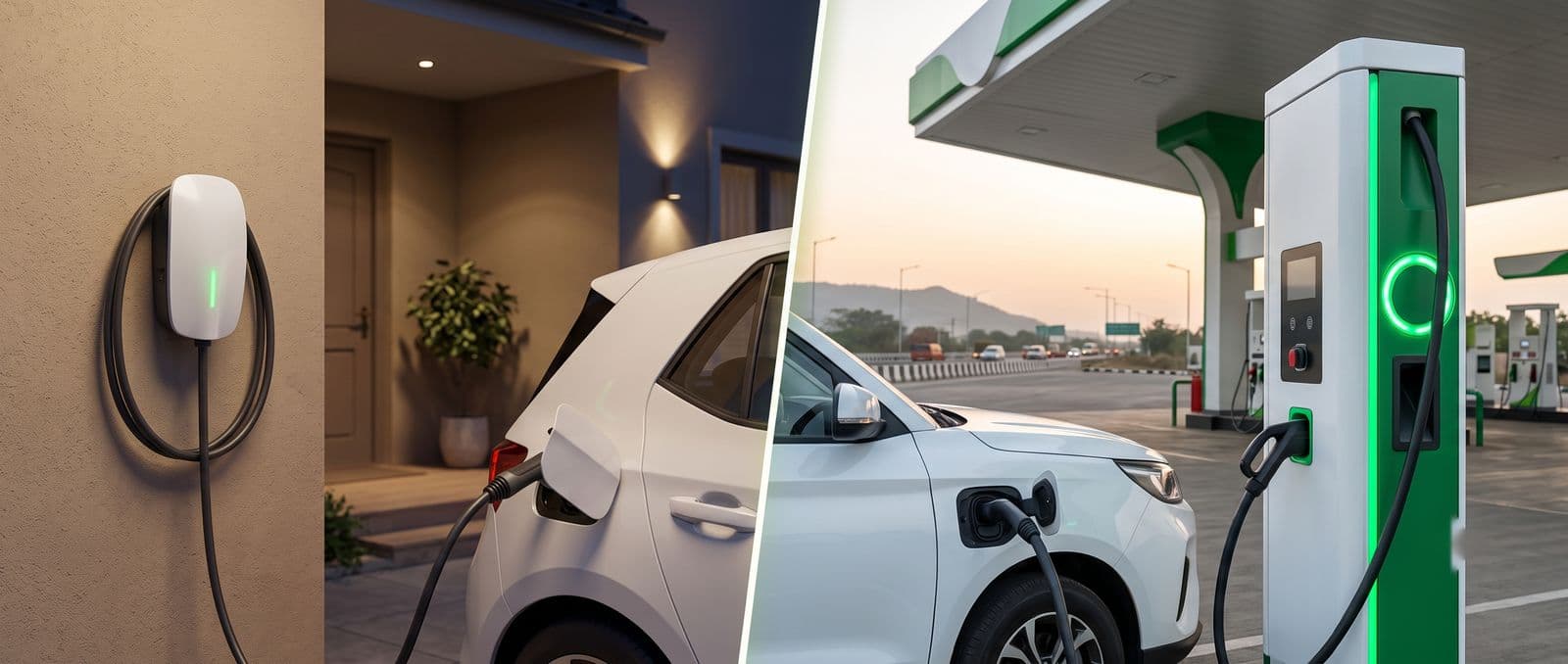
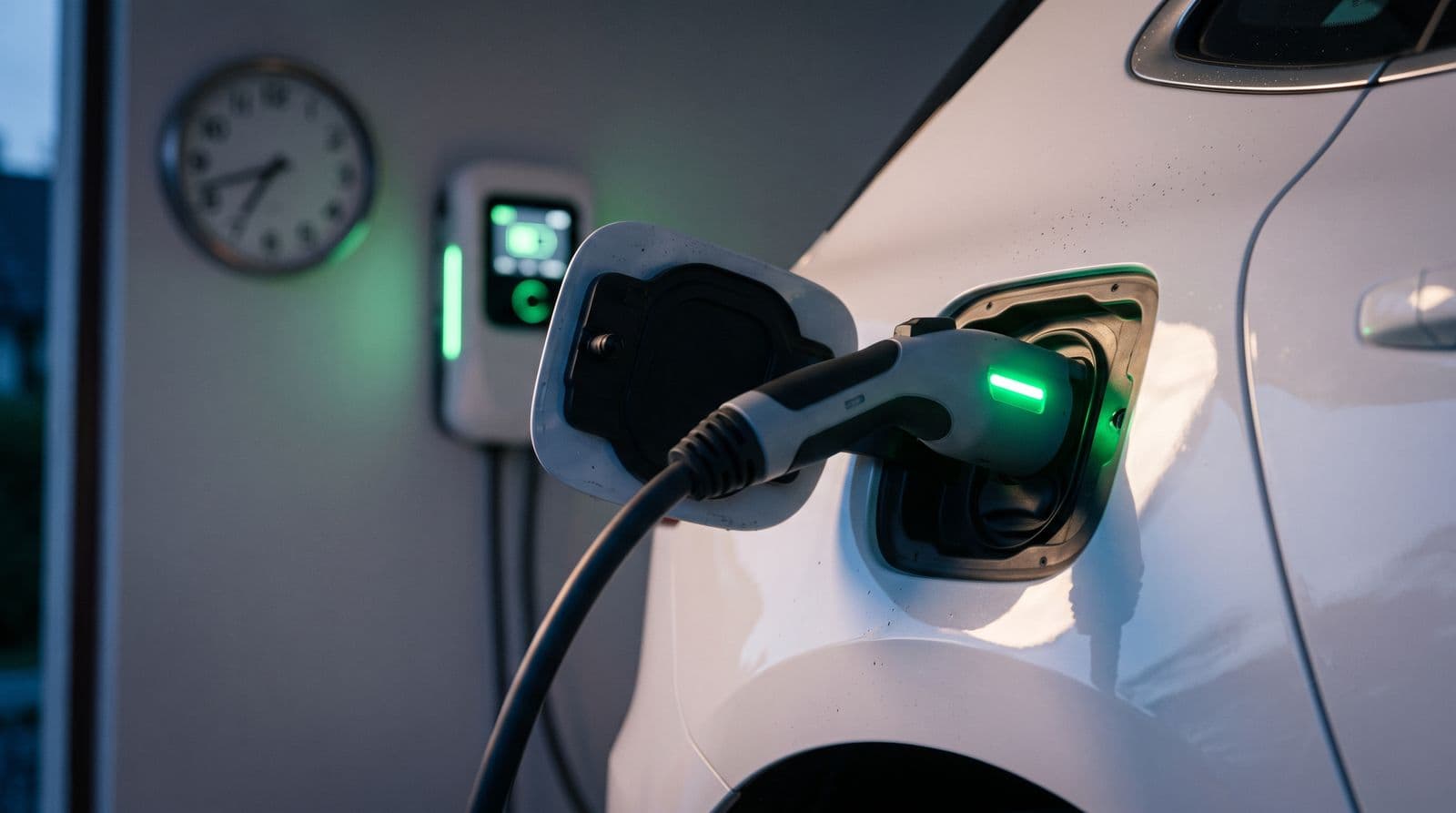
- Home charging: you pay your DISCOM's tariff. Residential rates vary widely by state and slab, commonly somewhere between about ₹3 and ₹9 per kWh. Some states offer concessional EV tariffs for separately metered EV connections.
- Public AC charging: usually cheaper than DC, with a modest service charge on top of electricity.
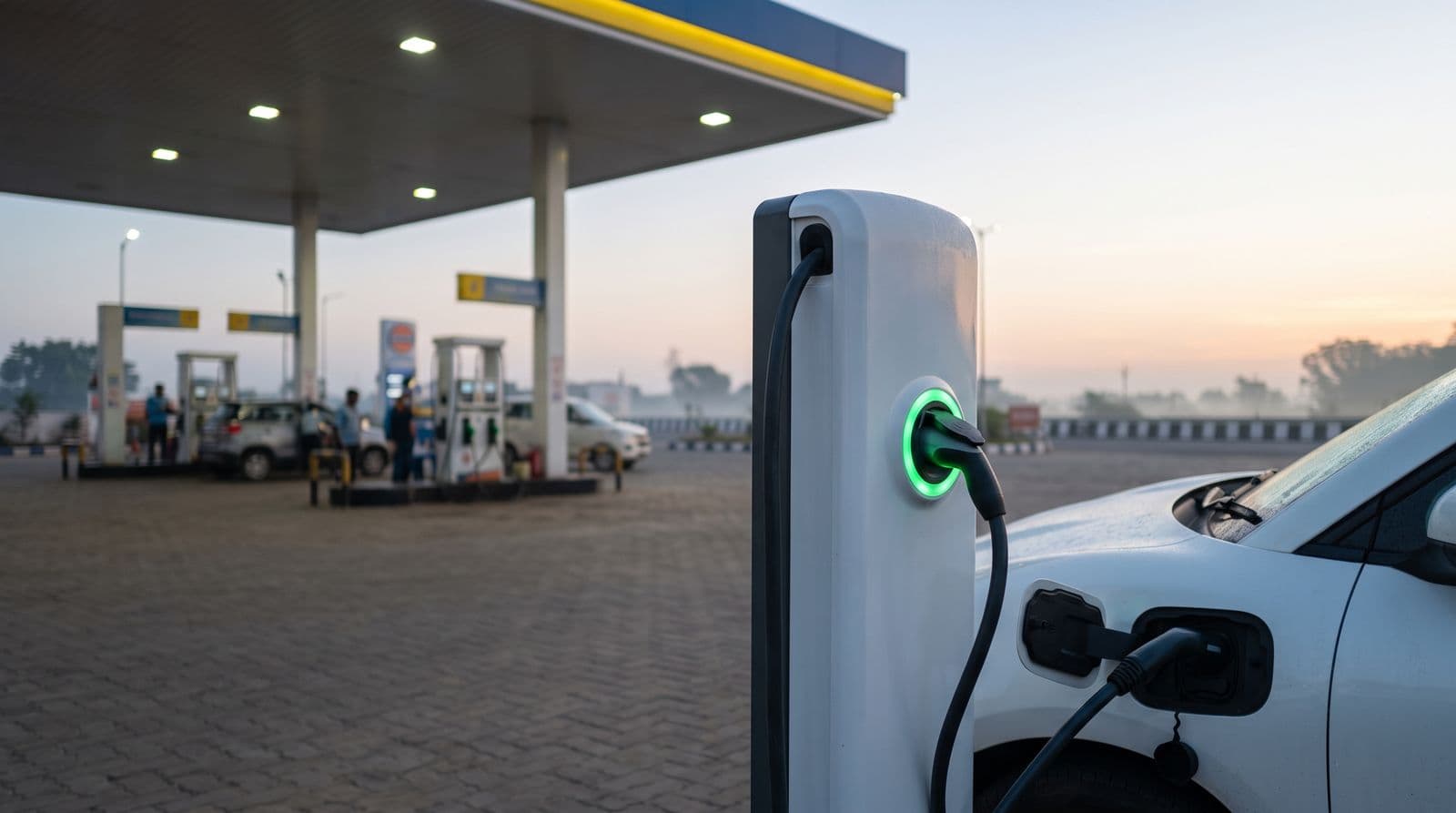
- Public DC fast charging: commonly around ₹15-25 per kWh before GST at many networks in 2025-26, varying by operator, city and time of day. Charging services attract 18% GST.
- Petrol: retail prices vary by state; in Chennai and Mumbai petrol has typically been priced at roughly ₹100–105 per litre in recent years.
Step 3: Do the maths
Using illustrative numbers - an EV at 6.5 km per kWh and a petrol car at 14 km per litre with petrol at ₹95 per litre - the comparison looks like this:
- Home charging at ₹8 per kWh: about ₹1.2 per km.
- Public DC charging at ₹20 per kWh plus 18% GST (about ₹23.6): about ₹3.6 per km.
- Petrol at ₹95 per litre: about ₹6.8 per km.
On these assumptions, an owner who charges mostly at home spends roughly a fifth of what a petrol owner spends on fuel. Even relying entirely on public fast charging, the EV still comes out ahead, though the gap narrows. Your own figures will differ, so plug in your actual tariff, efficiency and fuel price.
Tip: The single biggest lever on EV running cost is how much you charge at home or at work. Every session moved from DC fast charging to home AC charging cuts the cost of that energy substantially.
Maintenance and other costs
EVs have far fewer moving parts: no engine oil, spark plugs, clutch, timing belt or exhaust system. Regenerative braking also reduces brake wear. Scheduled service visits are typically simpler. Tyres can wear slightly faster because EVs are heavier and deliver instant torque. Battery warranties from major manufacturers in India commonly run to eight years with kilometre limits, but check the specific terms for your vehicle.
Taxes and incentives
Electric vehicles attract 5% GST in India, far lower than the rates on petrol and diesel cars. Many states have offered road tax and registration fee waivers for eligible EVs, so check your state’s current policy, such as Maharashtra’s EV Policy 2025 or Tamil Nadu’s EV Policy 2023. The upfront price of an EV is still usually higher than a comparable petrol car, so the total cost of ownership depends on how many kilometres you drive and for how many years.
When does an EV pay back?
- Calculate the price difference between the EV and the petrol equivalent, after incentives.
- Calculate your annual saving: (petrol cost per km minus EV cost per km) multiplied by annual km.
- Add estimated maintenance savings.
- Divide the price difference by the annual saving to estimate the payback period in years.
High-mileage drivers - cab operators, delivery fleets and long commuters - usually see the fastest payback, which is why fleets have been early adopters. For private owners, charging at home on a properly installed charger is usually the lowest-cost way to charge.
Fuel savings are real, but they are earned at the plug you use most often.
Run the numbers with your own tariff and driving pattern. For most Indian drivers who can charge at home, the running cost advantage of an EV is substantial.
Frequently asked questions
Multiply the battery capacity you need to fill (in kWh) by your electricity tariff, and add about 10% for charging losses. For example, adding 30 kWh at ₹8 per kWh costs roughly ₹260.
In most cases it is still cheaper per kilometre than petrol, but significantly more expensive than charging at home.
Electric vehicles attract 5% GST, EV chargers generally attract 5%, and EV charging services attract 18% GST as of 2025-26.
Sources
- GST on EV charging services remains 18% (pv magazine India)
- EV charging costs at public stations in India (Spinny)
- DERC EV charging tariff (Mercom India)
Policies and tariffs change. Information is accurate to the best of our knowledge as of the publication date.